Stewardship
How communities come together to care for Manoomin — honoring the reciprocal relationship between Manoomin and the people who have stewarded them across generations.
Caring for Manoomin in a Good Way
Stewardship means more than ecological management — it means honoring the reciprocal relationship between Manoomin and the communities that have cared for them since time immemorial.
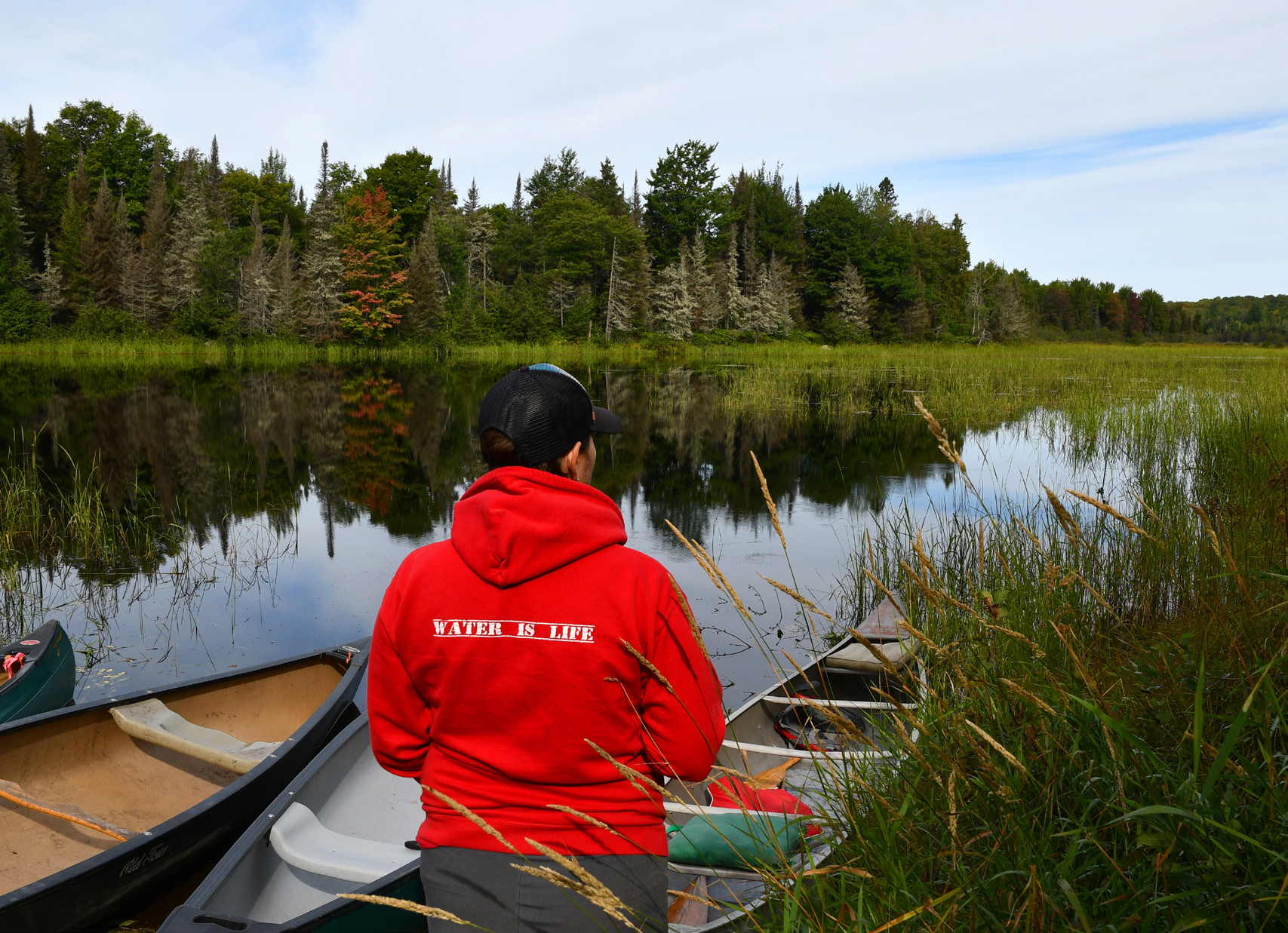
For Anishinaabe people, Manoomin is not a resource. They are a relative — a living being with personhood and a place in the web of relationships that holds the whole community together. Caring for Manoomin is an act of kinship, not just conservation.
MWRI's stewardship work brings together Tribal departments of natural resources, traditional ricing communities, state and federal research agencies, and universities around a common understanding: that protecting Manoomin requires both Traditional Knowledge and Western ecological science working in genuine partnership. Neither is sufficient alone.
Manoomin beds support a dense web of non-human relatives — waterfowl, fish, invertebrates, and other plants. Restoring Manoomin means restoring entire communities. MWRI approaches this work with humility, recognizing that Anishinaabe knowledge holders have observed and cared for these ecosystems for far longer than any scientific institution.
"Manoomin is at the center of our culture, our ceremonies, our identity. When Manoomin struggles, we struggle. When they thrive, we thrive."
Harvest as a Communal Act
Manoomin harvest is not simply an agricultural activity. It is a ceremony — governed by protocols, sustained by relationships, and understood as a gift that requires reciprocity.
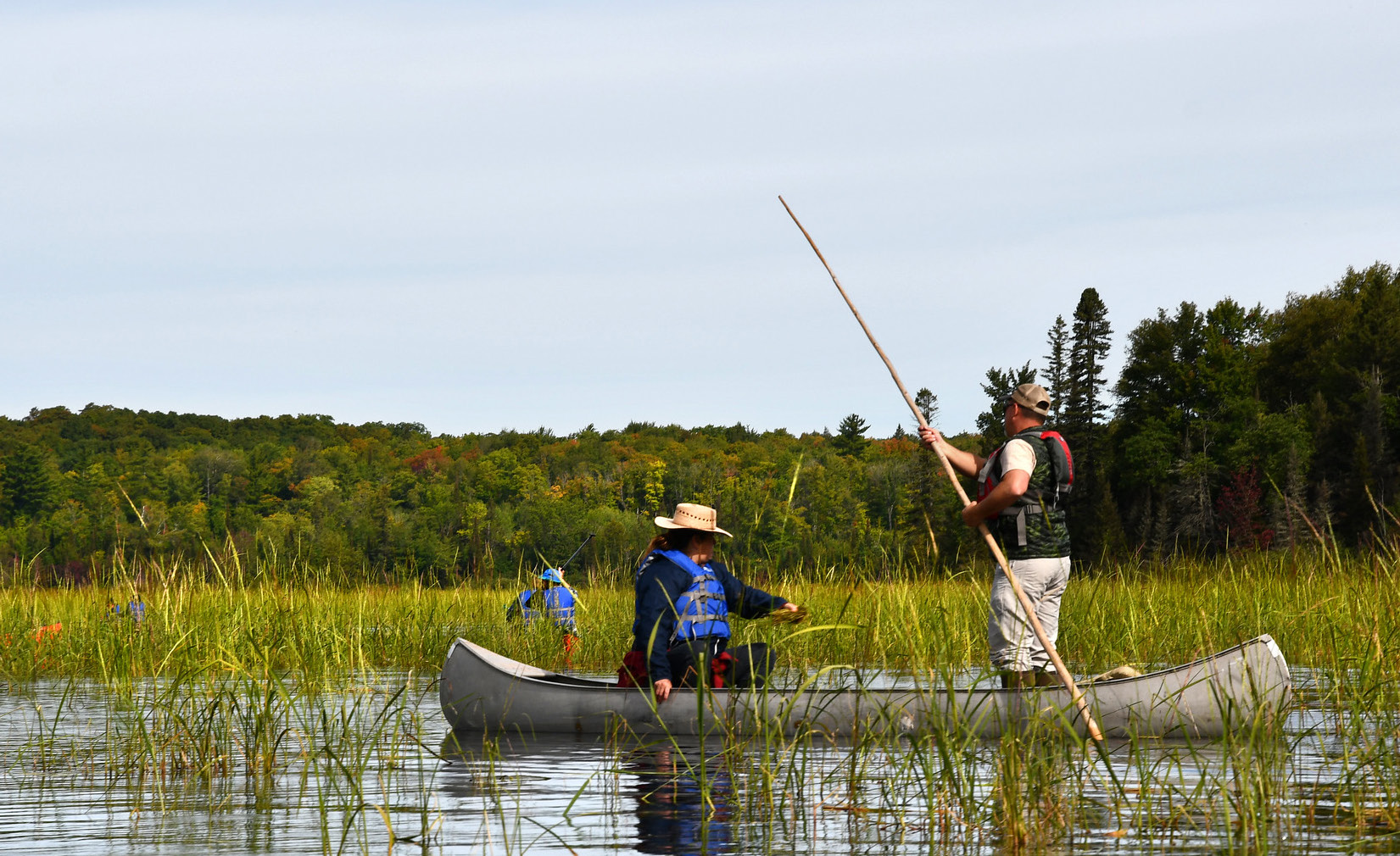
Harvesters observe practices that leave enough seed for wildlife and for the following year's crop. They enter the beds with gratitude and leave without taking more than their share. This reciprocal ethic is not a rule imposed from outside — it is a value that has been transmitted across generations as part of the knowledge that makes Anishinaabe communities who they are.
Processing Manoomin — drying, parching, jigging, and winnowing — is also embedded in ceremony and community. These practices bring people together across generations and maintain the transmission of knowledge that is itself part of the gift. When communities gather to process the harvest, they are not just preparing food; they are renewing relationship.
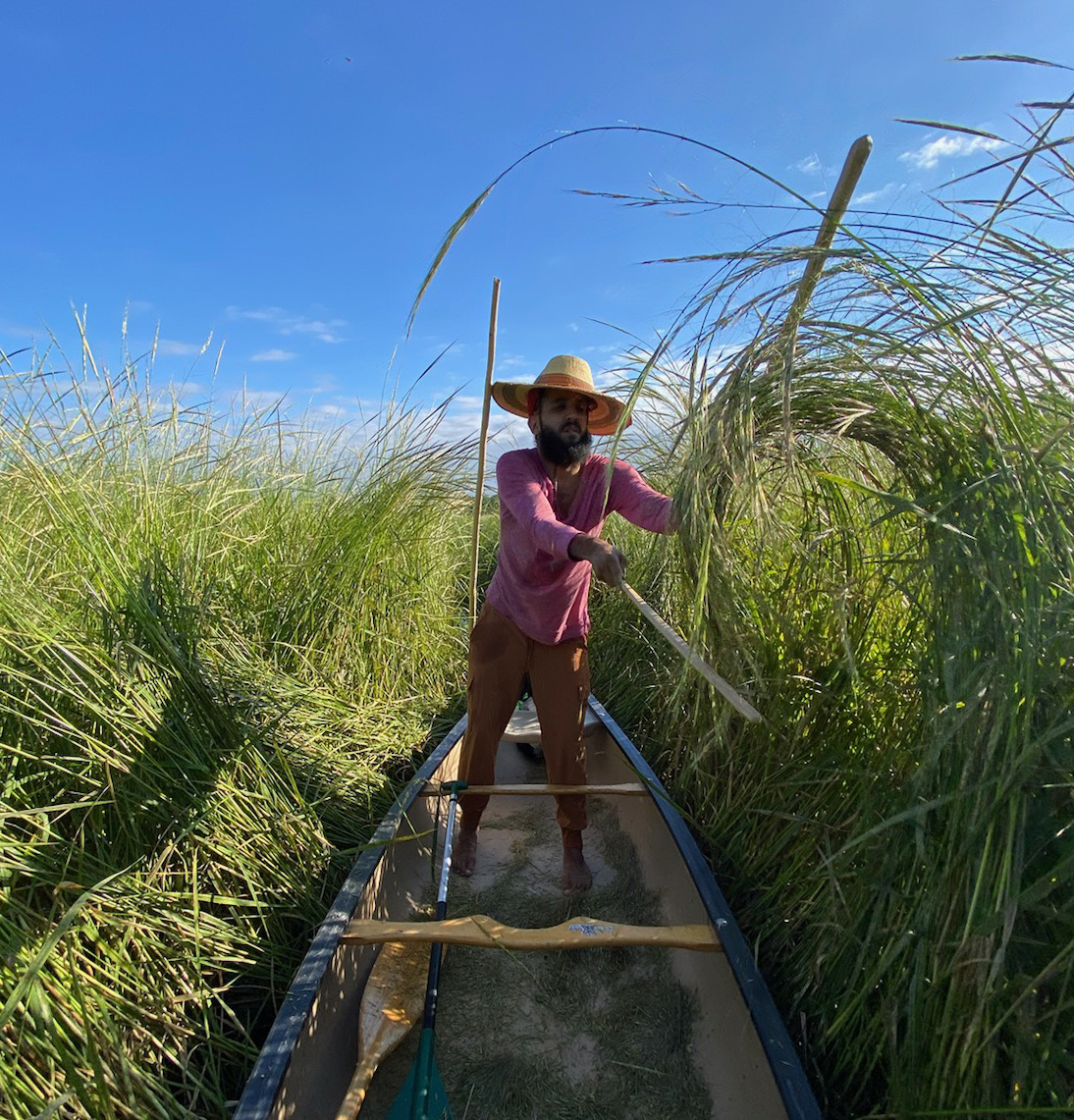
The timing of harvest is determined by community consensus, not by a calendar or a state agency schedule. Ripe Manoomin falls easily — the beds tell harvesters when they are ready. Community members observe the beds together, communicate what they are seeing, and open harvest season through shared decision-making that respects both the ecology and the relationships involved.
How We Protect Manoomin
Responsible stewardship means following practices that protect Manoomin's ability to regenerate — and discouraging practices that cause harm. These practices have been developed and refined through generations of observation and are documented in the MWRI Stewardship Guide.
- Harvest using traditional knocking sticks from a canoe
- Leave at least one-third of grain behind for wildlife and next year's crop
- Harvest only during sanctioned seasons when grain is fully ripe
- Use low-impact watercraft that do not damage root systems
- Follow community-established protocols for entering rice beds
- Participate in monitoring efforts to track bed health over time
- Harvesting unripe (green) seed, which reduces regeneration
- Recklessly breaking stalks or using harvesting equipment that damages beds
- Operating motorized watercraft through active Manoomin beds
- Harvesting outside of sanctioned windows before community agreement
- Treating Manoomin as an agricultural commodity for industrial cultivation
- Taking more than one's share and leaving nothing for non-human relatives
See Appendix 1: Best Stewardship Practices in the Stewardship Guide for the complete reference.
What We Are Working Toward
The following goals guide MWRI's stewardship work. They were developed collaboratively with Tribal nations, ricing communities, and partner organizations. Full objectives for each goal are detailed in Guide 2: MWRI Goals & Objectives.
Shared Research Agenda
Tribal departments of natural resources and culture, traditional ricing communities, state and federal research agencies, and universities maintain a common research agenda initially related to Manoomin protection and restoration, later investigating the effectiveness of education and public engagement approaches.
Shared Best Practices
A suite of shared best practices for supporting Manoomin protection and restoration — including restoration practices such as site selection, seed sourcing, and methods for sowing; approaches to monitoring; and social practices such as cultural teachings, ceremonies, and community consent to integrate local communities genuinely.
Clarified Jurisdiction & Responsibilities
Facilitated discussions among Tribal departments, traditional ricing communities, and local, state and federal agencies to clarify jurisdiction, responsibilities and expectations for Manoomin protection and restoration — which will vary seasonally and regionally.
Harvest Best Practices
A suite of best practices for Manoomin harvest, including a process for determining harvest season and allowable equipment — developed collaboratively by Tribal departments, traditional ricing communities, and state management agencies.
Restoration Goals & Tracking
Working with Tribal, state, federal and private partners to identify restoration goals for Manoomin and appropriate ways to track them across the landscape over time.
See Guide 2: MWRI Goals & Objectives for the full list of objectives accompanying these goals.
How You Can Participate in Stewardship
Caring for Manoomin is a community responsibility that extends beyond tribal nations to everyone who lives, works, and recreates in Manoomin watersheds. Guide 3 — Working in a Good Way with Manoomin — offers detailed guidance for different audiences.
As a Landowner or Lakeshore Resident
Protect riparian buffers on your property. Avoid using fertilizers or pesticides near waterways. Keep your shoreline natural rather than hardened. Before undertaking any work near Manoomin beds — including dock installation, dredging, or water control structures — contact the relevant Tribal natural resource department and EGLE.
As a Boater or Recreationist
Do not operate motorized watercraft through Manoomin beds. Clean, drain, and dry your watercraft before entering any new water body to prevent the spread of aquatic invasives. Respect seasonal closures and community-established access protocols.
As an Individual
Purchase authentic hand-harvested Manoomin from Tribal enterprises. Learn about the Anishinaabe relationship with Manoomin through the resources on this site and from Tribal educators. Understand that supporting Manoomin means supporting the sovereignty and wellbeing of the nations whose relationship with Manoomin makes their recovery possible.
As a Researcher or Scientist
Seek formal partnerships with Tribal natural resource departments before designing research. Include Tribal co-investigators as full research partners. Return all data and findings to communities in accessible formats. Follow tribal data governance agreements for any data collected in or about tribal communities.
As an Agency Staff Member
Engage Tribal nations as government-to-government partners — not as stakeholders or public commenters. Learn the basics of treaty rights and Tribal sovereignty before beginning any Manoomin-related work. Consult Tribal natural resource staff early in permitting and regulatory processes.
As a Conservation Organization
Support Tribal-led Manoomin initiatives with resources, advocacy, and institutional capacity — without attempting to lead or direct them. Advocate for the policy changes that Tribal nations are calling for. Do not develop independent "wild rice" programming that is not coordinated with MWRI and relevant Tribal nations.
Read the Full Guide
Guide 3 — Working in a Good Way with Manoomin — offers detailed principles and practical guidance for researchers, agency staff, educators, and community members who want to support Manoomin's recovery without causing harm in the process.
Read Guide 3: Working in a Good Way