Manoomin–Anishinaabe
Relationship
From We All Live Together in a Good Way with Manoomin — the foundational MWRI Stewardship Guide, First Edition, February 2025.
A Foundation for Everything That Follows
The Manoomin–Anishinaabe Relationship guide is the first of three guides in the MWRI Stewardship Series. It establishes who Manoomin is, the nature of the Anishinaabe relationship with them, Manoomin's life cycle and ecological role, and the threats that have diminished their presence in Michigan.
Understanding this relationship is not background context — it is the frame through which all of MWRI's stewardship, policy, and restoration work should be understood. Without this foundation, the goals and practices in Guides 2 and 3 lose their meaning.
Who Are Manoomin
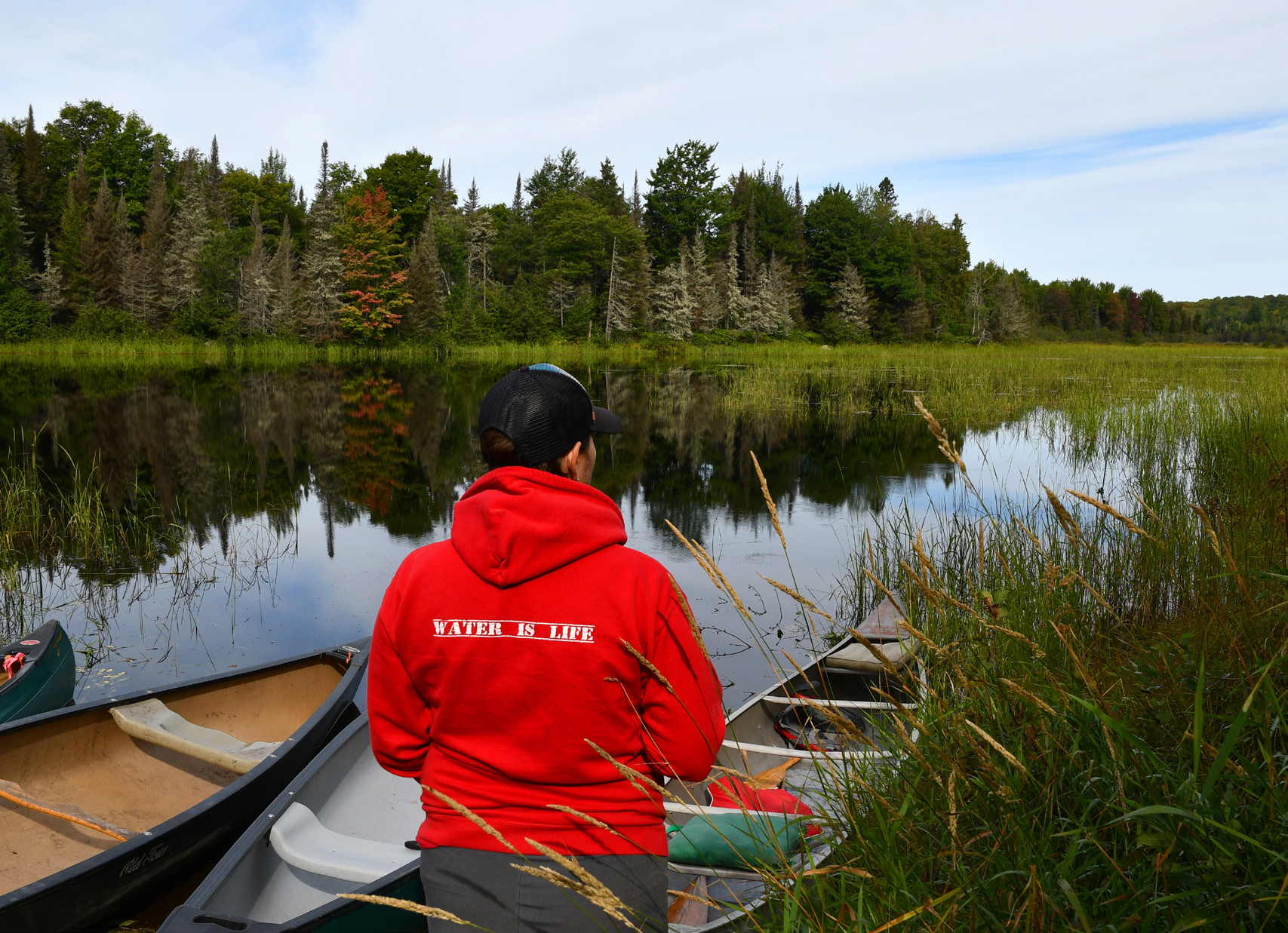
Manoomin is an aquatic grain that grows in the shallow freshwater lakes, rivers, and wetlands of the Great Lakes region. For the Anishinaabe people, Manoomin is a sacred relative — not a resource, not a commodity, but a living being with personhood and agency.
MWRI uses the pronoun "they/them" for Manoomin throughout all of its documents and communications. This is a deliberate choice that reflects the Anishinaabe understanding that Manoomin is a relative deserving of care and respect, not an object to be managed. The language we use shapes how we relate — calling Manoomin "it" naturalizes extraction; calling them "they" opens a different kind of attention.
"Manoomin/Mnoomin/Mnomen is a sacred relative. We seek a shared future where they are restored and flourishing in all ecosystems across the state."
— MWRI Vision StatementManoomin as a Keystone Species
Beyond their cultural significance, Manoomin plays a foundational ecological role in the lakes and rivers where they grow. Manoomin beds provide nesting and feeding habitat for waterfowl, spawning grounds for fish, shelter for aquatic invertebrates, and forage for mammals. They stabilize sediments, filter nutrients, and support the overall health of the water bodies they inhabit.
Because so many other species depend on Manoomin, their decline ripples through entire ecosystems. Restoring Manoomin means restoring not just a plant but the community of non-human relatives that live alongside them.
Three Names, One Relative
Manoomin is known by several names across Anishinaabemowin dialects: Manoomin (Ojibwe), Mnoomin (Potawatomi), and Mnomen (Odawa). All refer to the same sacred relative, and MWRI uses all three spellings in recognition of the different nations whose territories and languages encompass Manoomin's range.
The English term "wild rice" is used in legal and regulatory contexts but is avoided in MWRI documents where possible — it frames Manoomin as a crop variant rather than as a distinct, sovereign relative with their own identity.
What Manoomin Is Not
Most "wild rice" sold commercially bears no relationship to Manoomin. It is typically Zizania palustris cultivated in paddy systems in California or managed lakes in Canada — harvested mechanically and processed industrially. The spiritual, cultural, and ecological dimensions of Manoomin are entirely absent from that product.
Authentic Manoomin — hand-harvested from Michigan waters — is available through Tribal enterprises and community harvesters. Supporting these sources is one of the most direct ways non-Native individuals can support Manoomin communities.
The Anishinaabe Relationship with Manoomin
Anishinaabe people have lived in relationship with Manoomin since time immemorial. This relationship is not historical — it is living, present, and continuously renewed through harvest, ceremony, and the daily work of care.
A Prophecy Fulfilled
In Anishinaabe oral tradition, the Seven Fires Prophecy foretells a migration from the East to a place "where food grows on the water." For many Anishinaabe people, this refers to Manoomin — the arrival at the Great Lakes region and the gift of Manoomin as a sign of right relationship with the land. This prophetic dimension gives Manoomin's presence a significance that transcends nutrition or ecology: it marks the covenant between the Anishinaabe people and the territory they were given to steward.
"Manoomin is at the center of our culture, our ceremonies, our identity. When Manoomin struggles, we struggle. When they thrive, we thrive."
— MWRI Community VoiceHarvest as Ceremony
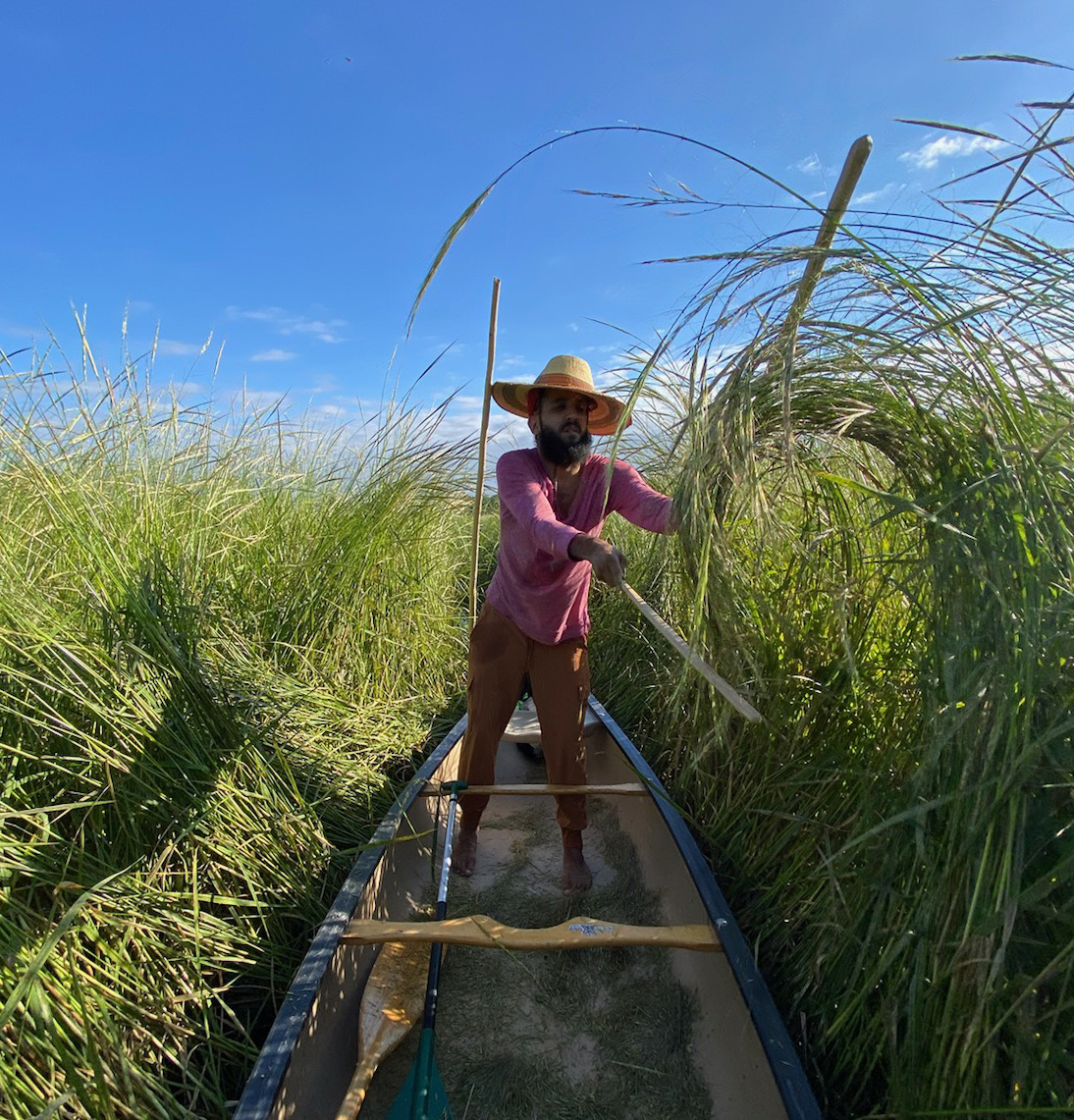
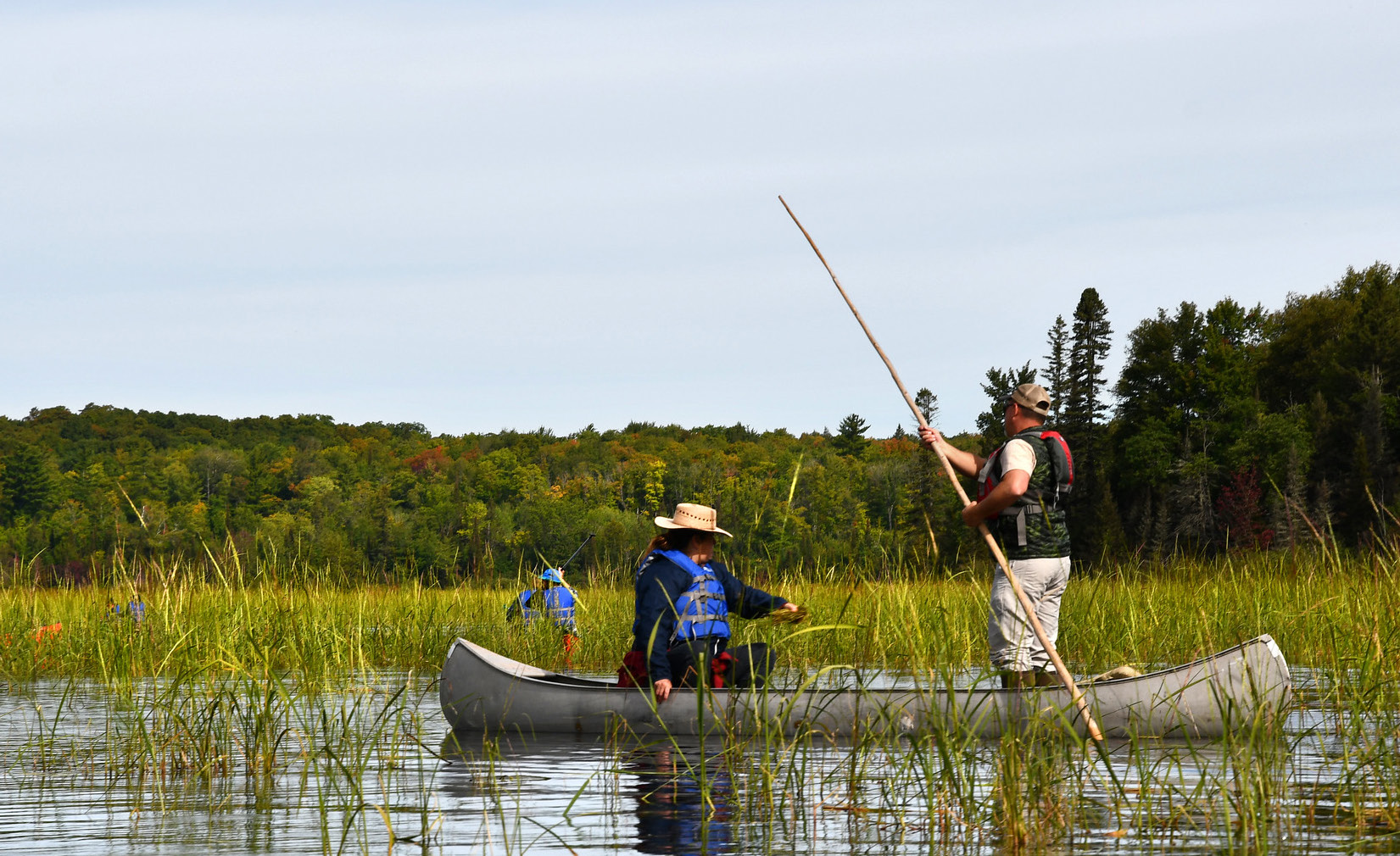
Manoomin harvest is not simply an agricultural activity. It is a ceremony — governed by protocols, governed by relationships, and understood as a gift that requires reciprocity. Harvesters observe practices that leave enough seed for wildlife and for the following year's crop. They enter the beds with gratitude and leave without taking more than their share.
Processing Manoomin — drying, parching, jigging, and winnowing — is also embedded in ceremony and community. These practices bring people together across generations and maintain the transmission of knowledge that is itself part of the gift.
Tribal Nations and Their Waters
MWRI works in partnership with the five federally recognized Anishinaabe nations in Michigan — Bay Mills Indian Community, Keweenaw Bay Indian Community, Lac Vieux Desert Band of Lake Superior Chippewa, Little River Band of Ottawa Indians, and Sault Ste. Marie Tribe of Chippewa Indians — as well as with the broader network of twelve Anishinaabe nations whose territories and treaty rights encompass the waters where Manoomin grows.
Each nation has its own governance structures, resource management protocols, and relationships with specific waters. MWRI respects and supports this diversity rather than seeking to flatten it into a single management framework.
Treaty Rights and Responsibility
Anishinaabe nations retain treaty-reserved rights to harvest Manoomin on ceded territories — rights that are federal law, not permissions granted by the state. These rights were not extinguished by statehood or by subsequent state regulations, and federal courts have consistently upheld them.
MWRI's policy work includes ensuring that state and federal agencies understand and respect these rights, and that Manoomin management decisions are made in genuine government-to-government partnership with Tribal nations rather than as an afterthought.
Manoomin's Life Cycle
Manoomin's annual life cycle mirrors the seasonal rhythms that Anishinaabe communities have observed and participated in for generations. Each season brings distinct responsibilities for the communities in relationship with Manoomin.
Spring
Overwintered seeds germinate in the lake bed. "Floating leaf" stage begins — ribbon-like leaves drift on the surface. Water clarity and depth are critical at this stage.
Summer
Stalks emerge above the water surface, growing up to ten feet tall. Manoomin flowers, with separate male and female florets. Pollination occurs in mid-summer.
Fall
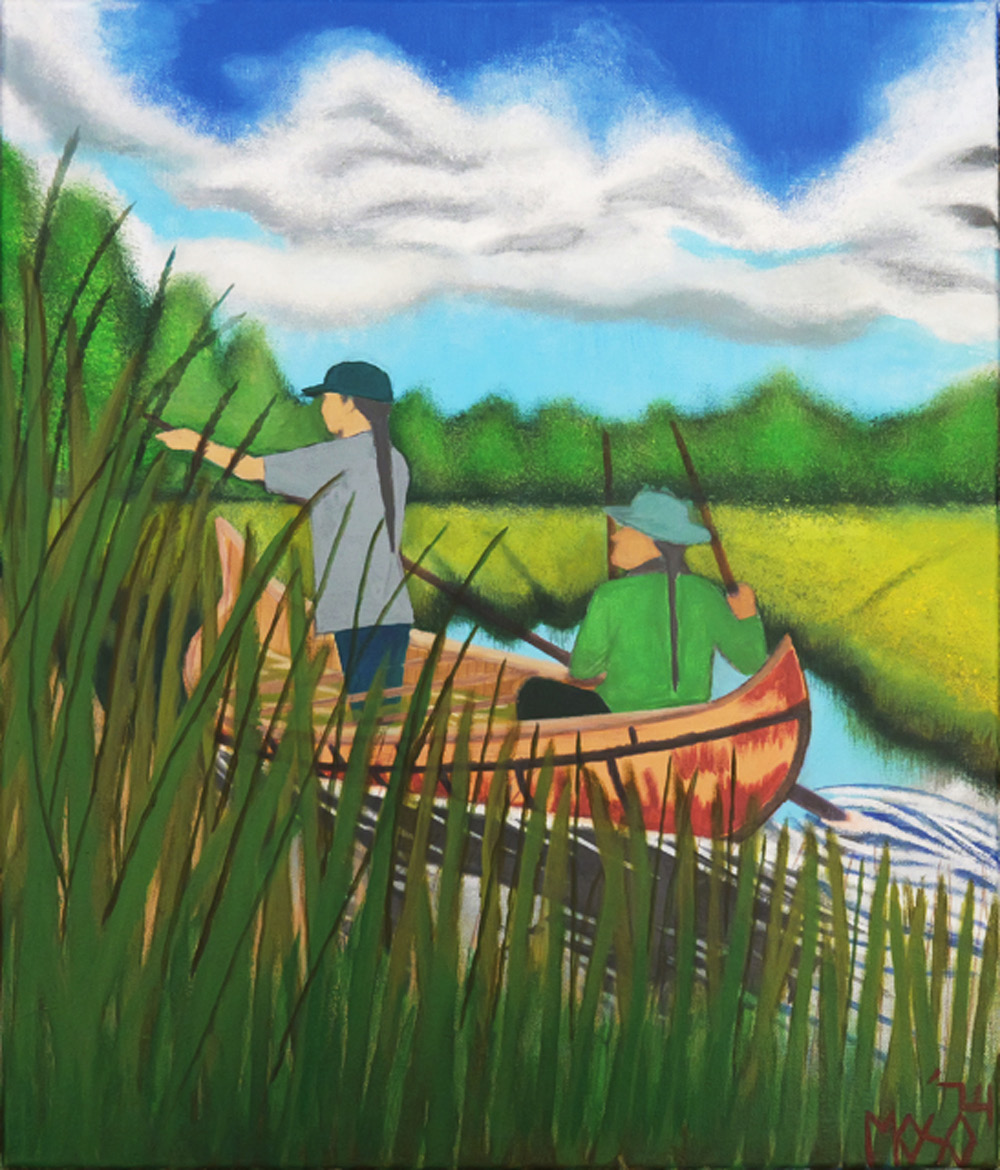
Grain ripens between late August and mid-September. Harvest occurs over a narrow window — ripe grain falls easily. Harvesters knock grain into canoes using traditional sticks.
Winter
Stalks die back and decompose, returning nutrients to the water. Seeds overwinter in the lake bed, requiring cold stratification to germinate the following spring.
Each stage of Manoomin's life cycle requires specific water conditions — depth, clarity, temperature, chemistry — that are sensitive to disturbance. Protecting Manoomin means protecting the water conditions that support every stage of this cycle.
Challenges Facing Manoomin
Manoomin faces a range of interconnected threats, most of them rooted in the same extractive and industrial patterns that have harmed Indigenous peoples across the region. Understanding these threats is the first step toward effective response.
Water Quality Degradation
Agricultural runoff, urban stormwater, and failing septic systems introduce excess nutrients into Manoomin waters, causing algal blooms that block sunlight and reduce the water clarity that Manoomin seedlings depend on.
Invasive Species
Invasive carp devastate the shallow, turbid water habitat Manoomin depend on through feeding disturbance. Invasive Phragmites can outcompete Manoomin in disturbed wetlands. Aquatic invasives spread rapidly via contaminated watercraft.
Hydrological Alteration
Dams, drainage ditches, and shoreline hardening disrupt the seasonal water-level fluctuations that Manoomin's life cycle depends on. Too much water during germination smothers seedlings; too little during summer stresses established plants.
Climate Change
Warmer winters, altered precipitation, and more intense storms affect the water temperature, ice duration, and hydrological timing that Manoomin's cold-stratification requirement depends on. Long-term range shifts are already being observed.
Get the Full Guide
Guide 1 is part of the complete MWRI Stewardship Guide — a 122-page living document available as a free download. Individual guide sections are also available separately.
Download will open in a new tab.