Manoomin is the official native grain of Michigan — Learn about Public Act 247 →

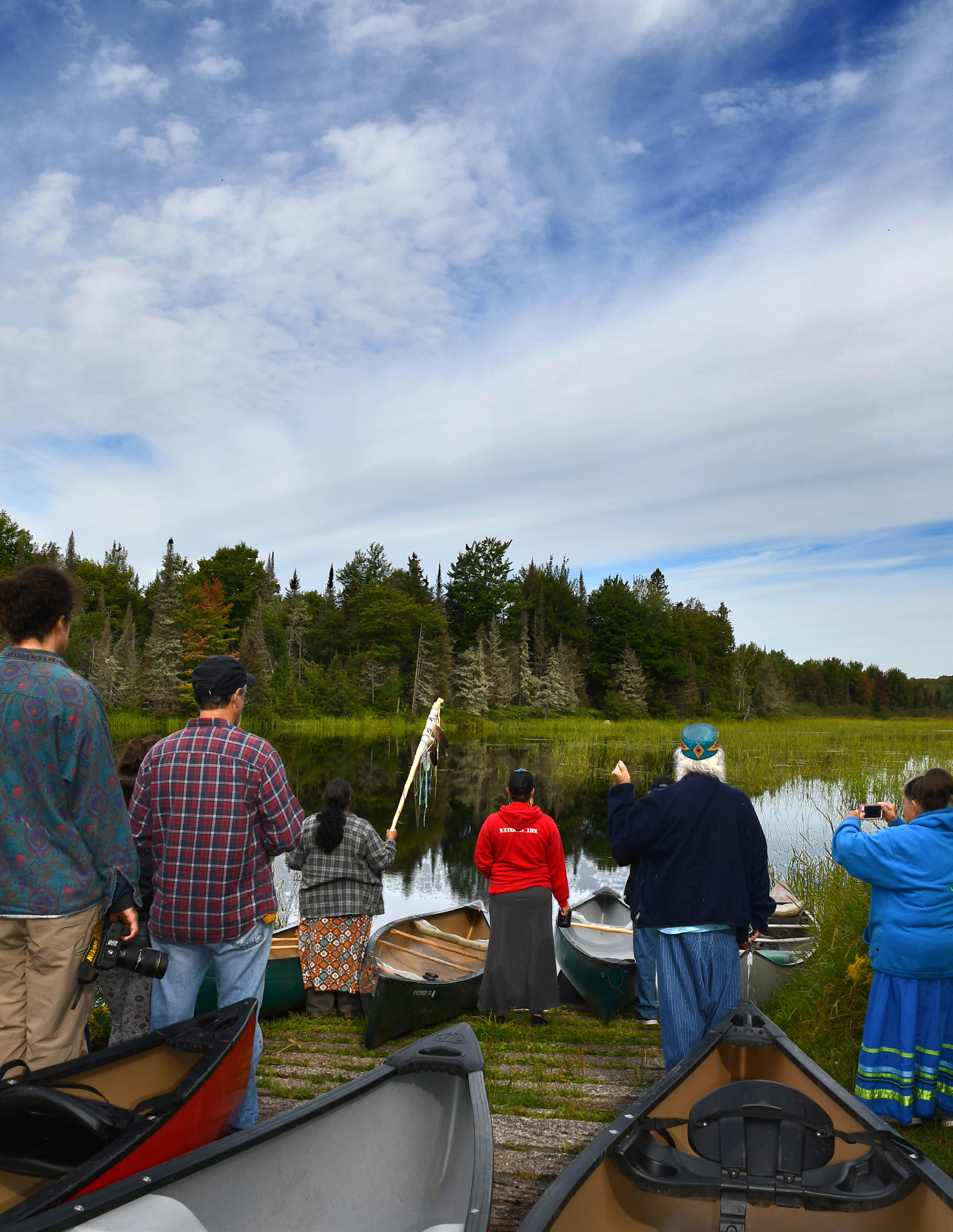
MWRI members gathered at the water's edge with canoes at a Michigan Manoomin lake

Working Together
for Manoomin

The Michigan Wild Rice Initiative brings together Tribal nations, state agencies, knowledge holders, and communities to protect, restore, and honor Manoomin across Michigan.

Our Mission

The Michigan Wild Rice Initiative brings together Tribal (Anishinaabe) government and state agency personnel, academics, knowledge holders, and other environmental and cultural experts to revitalize Manoomin culture and abundance.

We seek a shared future where Manoomin are restored and flourishing in all ecosystems across the state — where there are environmental and social conditions to protect, support, and enhance thriving communities.

  • Manoomin fulfill their spiritual, cultural, and ecological roles within regional ecosystems
  • All Indigenous People who want to are able to harvest Manoomin sustainably in a traditional, good way
  • Manoomin are not defined or treated as an agricultural commodity for industrial cultivation

MWRI believes Manoomin offers a path for Anishinaabe and non-Anishinaabe communities and governments to learn how to work together in a good way. By spreading awareness of these principles, MWRI promotes a future in which all who share these two peninsulas live together in a good way with Manoomin.

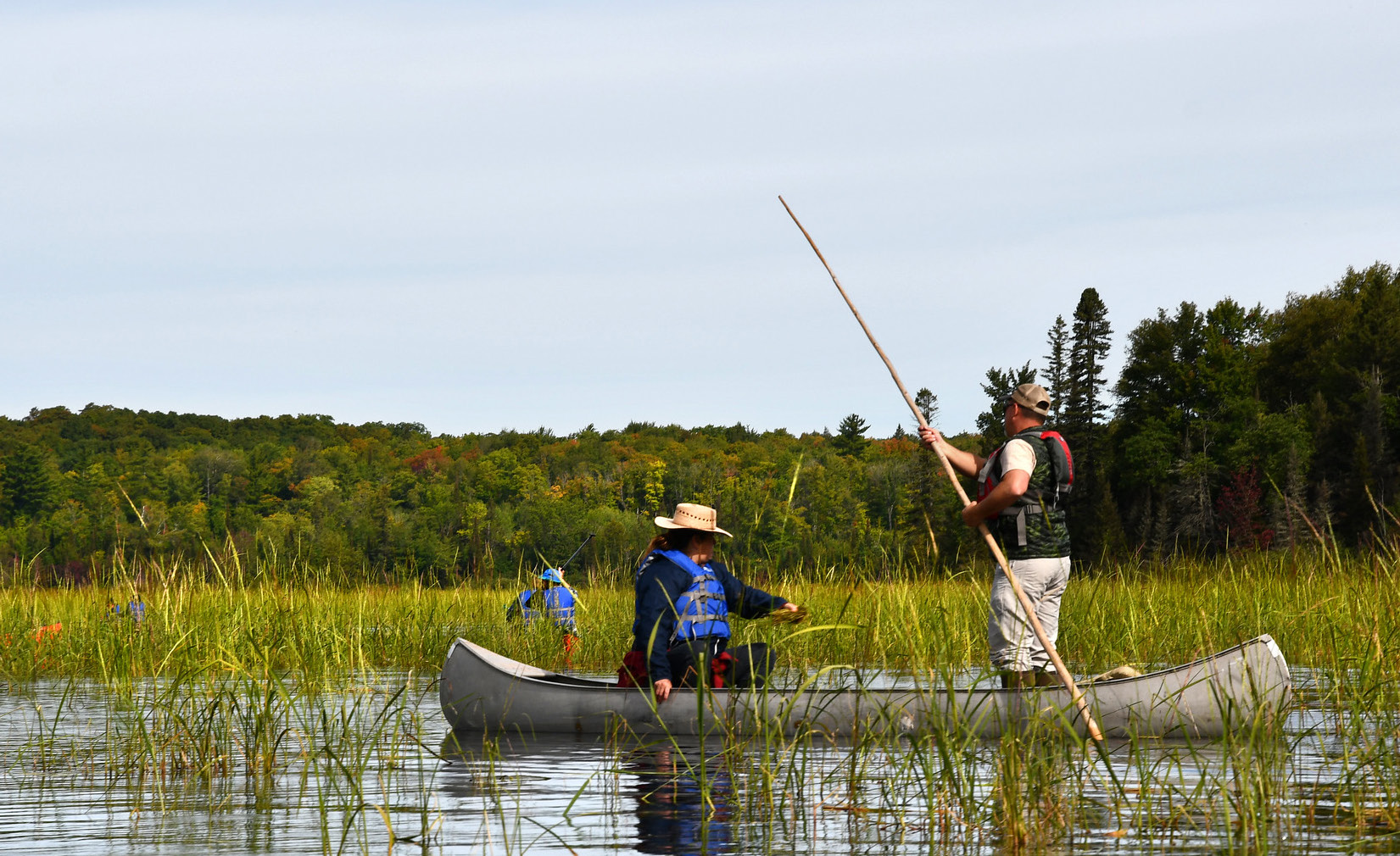
Researchers in a canoe among tall Manoomin stalks on a Michigan lake
Collaborative fieldwork on a Michigan Manoomin lake. Credit: Todd Marsee, Michigan Sea Grant

We all live together in a good way with Manoomin. The lessons that collaborators learn through this effort will be insightful for guiding future collaborations in caring for other non-human relatives.

We All Live Together in a Good Way with Manoomin: Stewardship Guide, First Edition, February 2025

How MWRI Came to Be

The Michigan Wild Rice Initiative grew out of decades of Anishinaabe advocacy and a recognition that protecting Manoomin requires coordination across Tribal nations, state agencies, and the broader Michigan community.

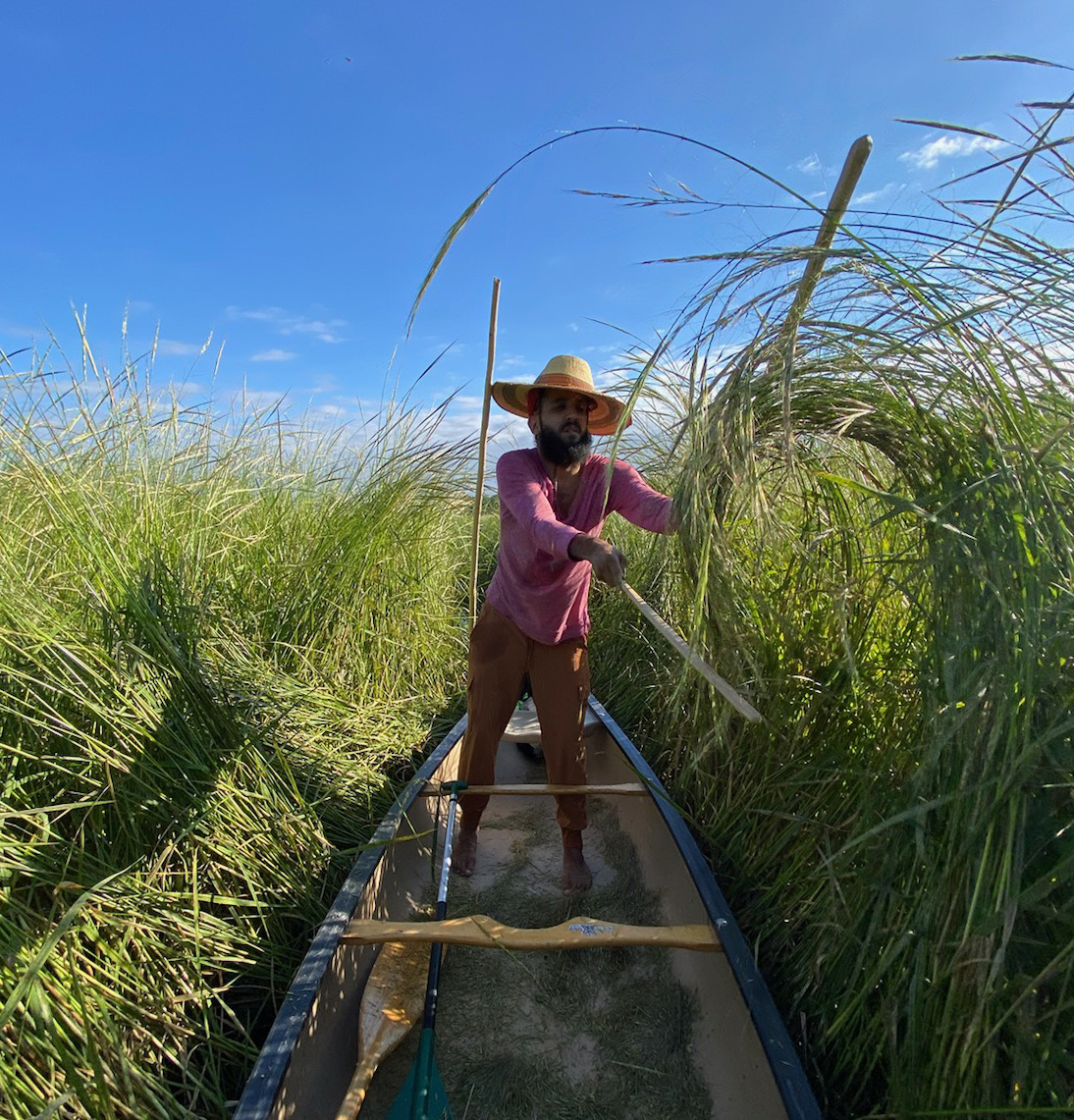
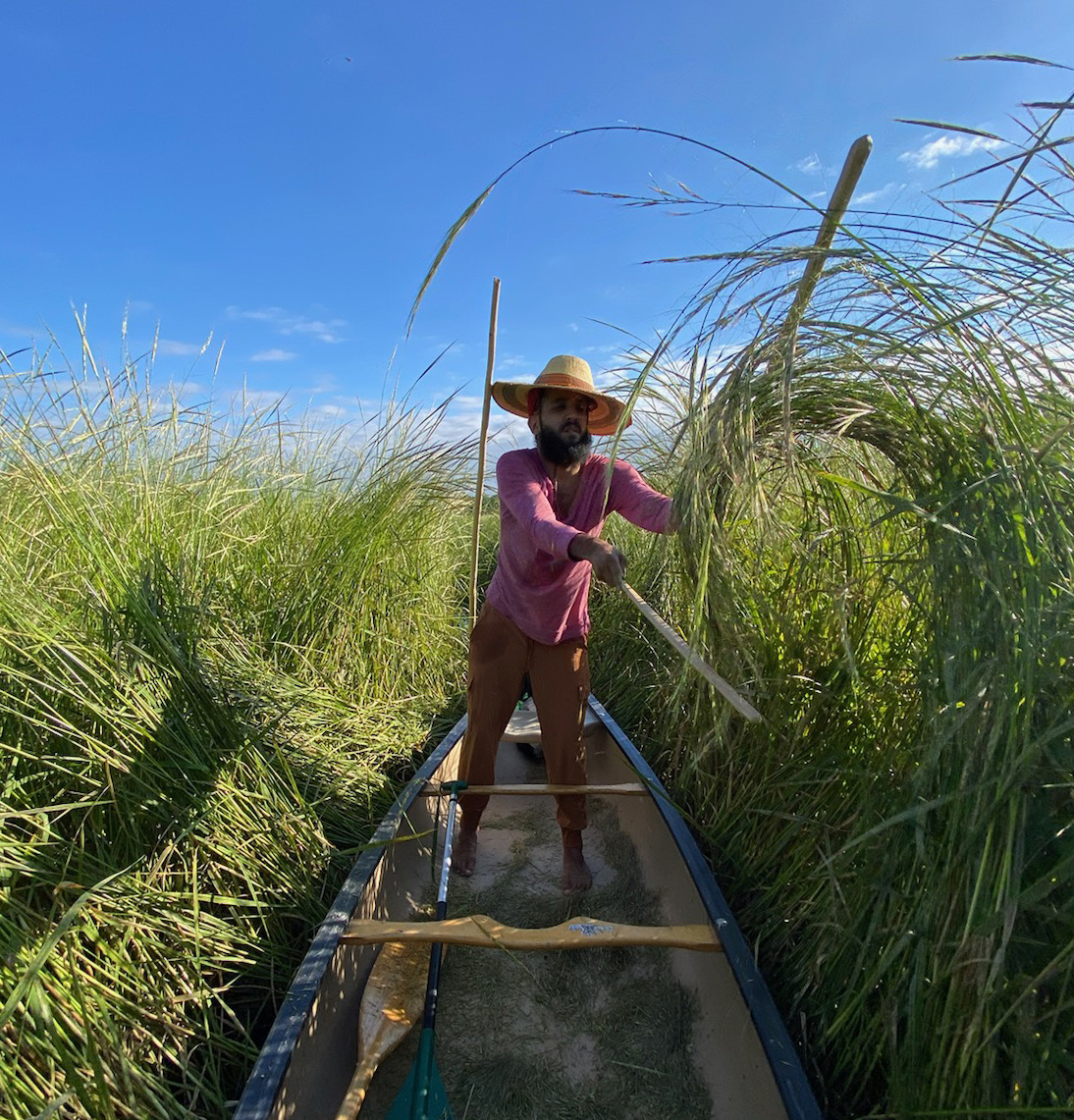
Antoine Cozine harvesting Manoomin in a canoe through tall wild rice stalks
Antoine Cozine harvesting Manoomin. Credit: Todd Marsee, Michigan Sea Grant

Since 2017, the Michigan Wild Rice Initiative has brought together managers, specialists, knowledge holders, and academics to protect, preserve, and restore Manoomin and the culture surrounding it. MWRI is co-chaired by a state and a Tribal representative and is led by the Anishinaabe people who have carried this responsibility for generations.

For generations before MWRI was formalized, Anishinaabe relatives were advocating for the State of Michigan to protect Manoomin beds and aid in their restoration and revitalization. MWRI emerged to give coordinated structure to this advocacy — channeling the knowledge, relationships, and urgency that already existed into a collaborative framework capable of influencing policy, restoring habitat, and educating the next generation.

A landmark moment came in November 2023, when — after years of Anishinaabe advocacy — the State of Michigan designated Manoomin as the official native grain of the state under Public Act 247. Michigan became the first state in the nation to recognize both Zizania palustris and Z. aquatica as forms of the same cultural being, balancing Anishinaabe and Western ways of knowing. The recognition took effect in February 2024.

MWRI draws members from Tribal nations, state and federal agencies, conservation NGOs, colleges, and universities — reflecting the understanding that protecting Manoomin requires collaboration across many knowledge systems and institutions.

2017 Year Founded
12 Anishinaabe Nations
2023 Public Act 247 Signed
What Threatens Their Future

Manoomin face a convergence of ecological, regulatory, and cultural threats that have reduced their abundance across Michigan over the past century. Understanding these threats is foundational to the work of MWRI.

Careless Destruction & Negligent Harvest

Michigan currently has no Manoomin-specific harvest regulations. Anyone can gather as much seed as they choose, in any manner, with no accountability for practices that harm beds — such as gathering unripe seed, breaking stalks, or using inappropriate equipment. This regulatory gap leaves Manoomin vulnerable to unsustainable exploitation.

Disrupting Community Balance

The introduction of invasive species, recreational overuse of waterways, and careless boating and motorcraft damage the delicate ecological balance that Manoomin depend on. Manoomin beds are deeply interconnected communities — disruptions to water levels, substrate, or neighboring species reverberate throughout the entire system.

Landscape Changes

Shoreline development, drainage projects, altered water levels from dams and diversions, and agricultural runoff have degraded and destroyed Manoomin habitat across Michigan. The complex riparian ownership structure — where lake and riverbed ownership is divided among adjacent landowners — creates a patchwork of jurisdictions that makes coordinated protection difficult.

Climate Change

Rising water temperatures, shifting precipitation patterns, increased storm intensity, and earlier ice-out dates are altering the conditions that Manoomin have adapted to over generations. Warmer water temperatures favor algae blooms and competing vegetation. These changes compound existing pressures, making restoration and long-term monitoring more urgent than ever.

Regulatory Gaps

Michigan lacks Manoomin-specific regulations for harvest, processing, and distribution. While river wild rice (Zizania aquatica) is listed as threatened under state law, lake wild rice (Z. palustris) has no such designation. The absence of clear legal frameworks makes it difficult to enforce protections, allocate harvest, or hold bad actors accountable.

Cultural Erosure & Disconnection

Colonization and the disruption of Anishinaabe cultural practices have created gaps in intergenerational transmission of knowledge about Manoomin — how to harvest respectfully, how to process the seed, and how to understand Manoomin's place in the web of life. Rebuilding these connections is central to MWRI's education and outreach mission.

How MWRI Organizes Its Work

MWRI advances its mission through three working subcommittees, each guided by members with relevant expertise. The goals across subcommittees are interconnected and must advance together.

Education & Outreach

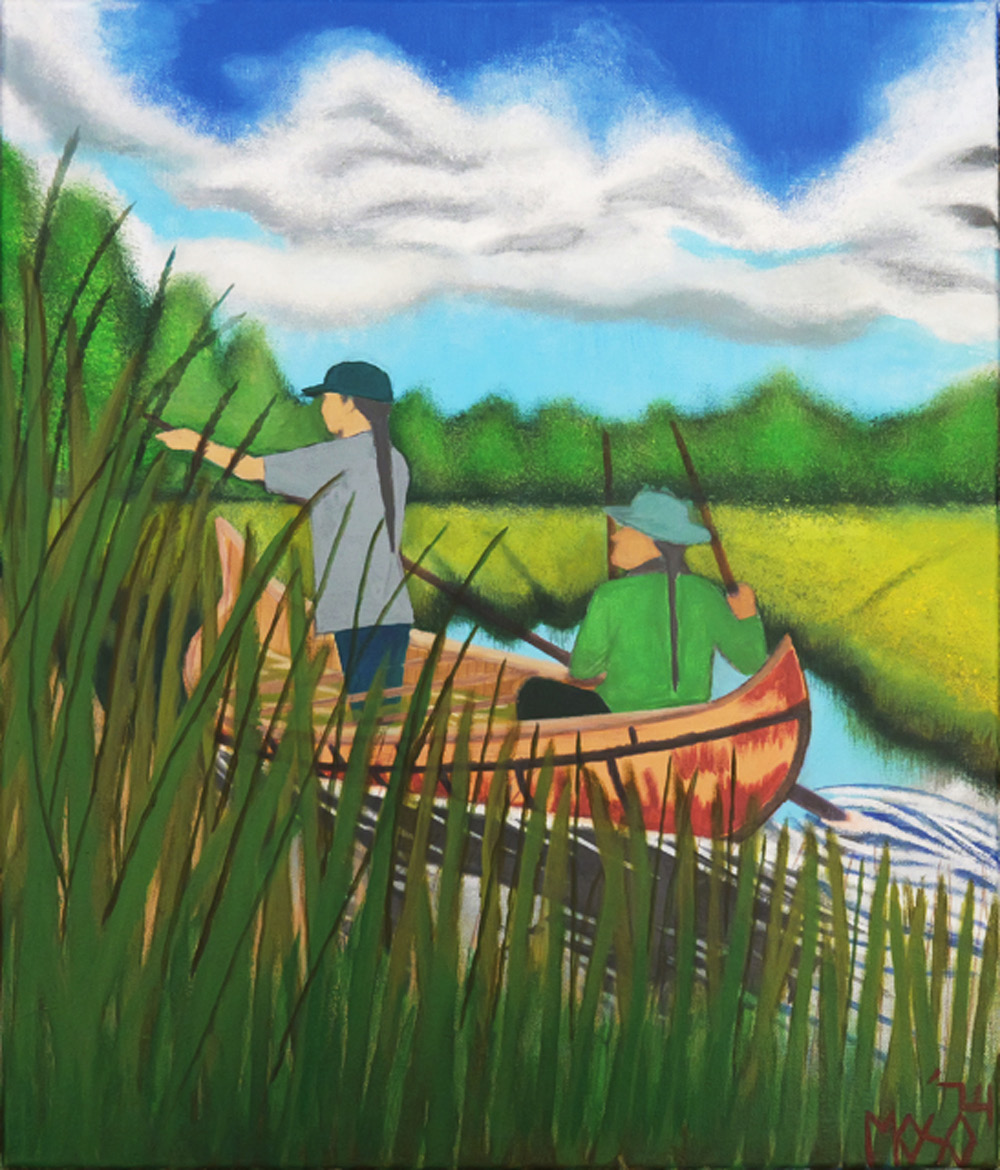
Father and Son Harvest painting by Shane Mineau — two figures harvesting wild rice from a red canoe
Father and Son Harvest — Shane Mineau (USA)

The Education & Outreach Subcommittee works to build widespread awareness and appreciation for Manoomin's cultural, spiritual, and ecological significance across Michigan. Activities reach Indigenous and non-Indigenous communities, schools, professional networks, land managers, and the general public.

Goals

  • Indigenous and non-Indigenous community members, especially youth, embrace the cultural, spiritual, and ecological value of Manoomin
  • State and federal land managers value Manoomin and seek opportunities to protect, restore, and enhance them
  • Restoration and conservation professionals receive technical training on Manoomin protection
  • Riparian landowners recognize and respect the value of Manoomin on their properties
  • Michiganders braid Manoomin into their cultural identity across generations

Key Activities

  • Annual Manoomin rice camps open to community members of all backgrounds
  • School programs and youth outreach connecting students to Manoomin's story
  • Workshops and training sessions for agency staff, consultants, and extension professionals
  • Development and distribution of educational materials, including this Stewardship Guide
  • Presentations at conferences and professional gatherings

Explore Education & Outreach →

Policy & Protection

Researchers in a canoe working among Manoomin stalks on a Michigan lake
Fieldwork in a Manoomin bed. Credit: Todd Marsee, Michigan Sea Grant

The Policy & Protection Subcommittee works to advance legal protections for Manoomin, uphold Tribal Treaty rights, and ensure that government agencies at every level understand and honor their obligations to Manoomin and to Anishinaabe harvesters.

Goals

  • Ensure recognition of Manoomin's importance among non-Indigenous communities and institutions
  • Federal, state, and local governments respect Treaty rights and collaborate with Tribal authorities in permitting and land decisions
  • Maximize harvest access to Manoomin beds on public and private bottomlands
  • State conservation officers understand Treaty usufruct rights and appropriate harvesting practices
  • Secure consistent and adequate funding for Manoomin-related activities statewide
  • Governance and collaboration dynamics are clearly illustrated to support stronger inter-Tribal and agency work

Key Activities

  • Advocacy for Manoomin-specific harvest and distribution regulations in Michigan
  • Engagement with state and federal permitting processes affecting Manoomin habitat
  • Treaty rights education for agency staff and the public
  • Collaboration with land and water conservancies to influence land use management policy
  • Work with legislators and program officers to establish dedicated Manoomin funding streams

Explore Policy & Protection →

Monitoring & Restoration

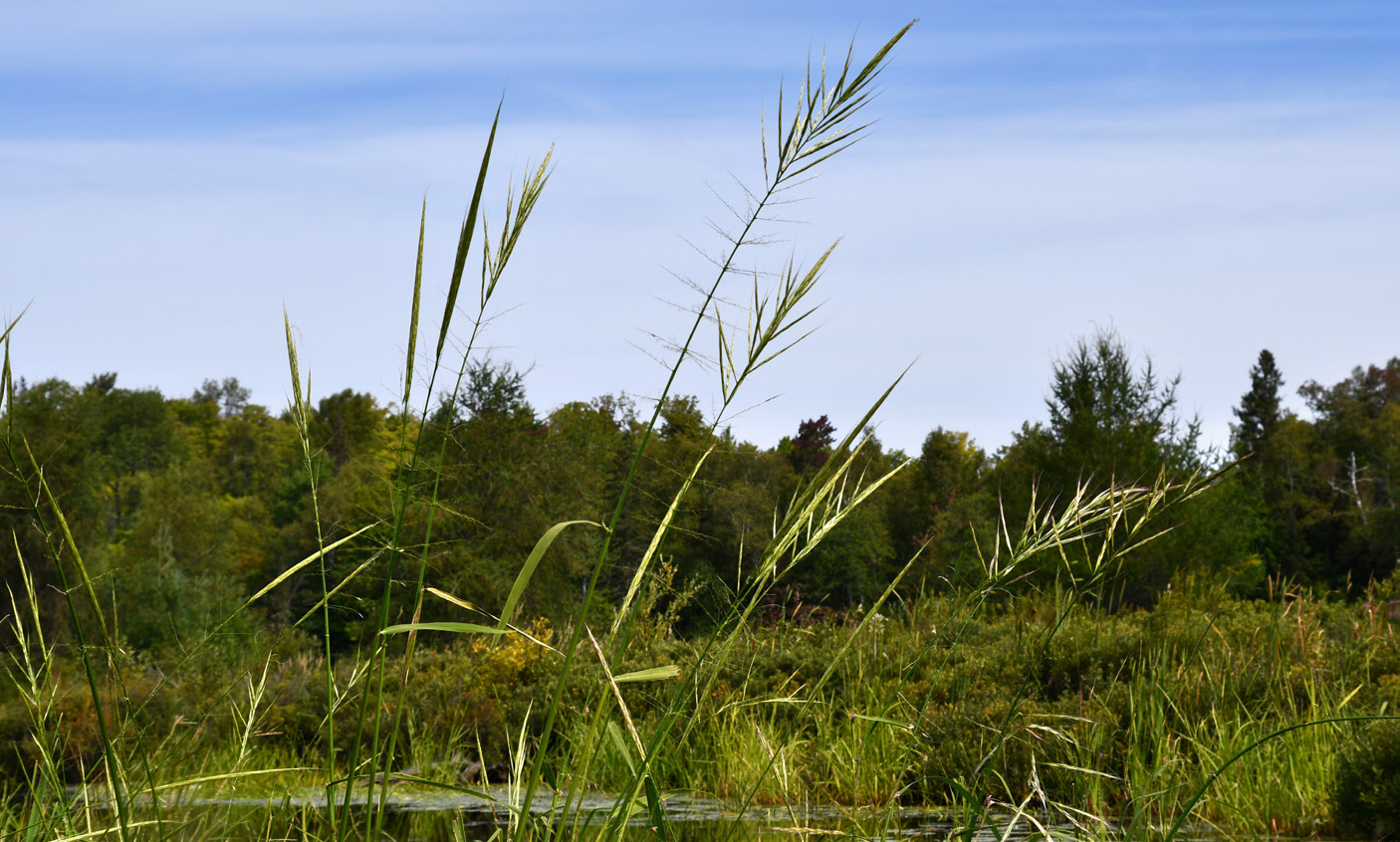
A tall Manoomin stalk standing in calm water against a treeline — Manoomin in their natural habitat
Manoomin in their natural habitat. Credit: Todd Marsee, Michigan Sea Grant

The Monitoring & Restoration Subcommittee coordinates scientific and Traditional Knowledge-based monitoring of Manoomin across Michigan's waters, develops shared restoration protocols, and builds a data infrastructure that respects Tribal data sovereignty.

Goals

  • Maintain a common research agenda across Tribal departments, traditional ricing communities, state and federal research agencies, and universities
  • Develop shared best practices for Manoomin protection and restoration, including site selection, seed sourcing, sowing methods, and monitoring approaches
  • Clarify jurisdiction, responsibilities, and expectations for Manoomin protection across agencies and seasons
  • Establish harvest best practices including season determination and allowable equipment
  • Identify restoration goals and appropriate tracking methods with Tribal, state, and federal partners

Key Activities

  • Annual bed surveys and population monitoring at known Manoomin sites across Michigan
  • Seed banking and controlled reseeding of degraded Manoomin beds
  • Development of a shared monitoring protocol and data collection framework
  • Research partnerships with Michigan Sea Grant, universities, and Tribal natural resource departments
  • Data governance agreements ensuring Tribal sovereignty over sensitive site data

Explore Monitoring & Restoration →

The Twelve Anishinaabe Nations

MWRI is a collaboration among the twelve federally recognized Anishinaabe nations that share geography with the state of Michigan — the Ojibwe, Odawa, and Bodéwadmi nations of the Council of Three Fires, or Niswi-mishkodewinan.

Bay Mills Indian Community
Grand Traverse Band of Ottawa and Chippewa Indians
Hannahville Indian Community
Keweenaw Bay Indian Community
Lac Vieux Desert Band of Lake Superior Chippewa Indians
Little River Band of Ottawa Indians
Little Traverse Bay Bands of Odawa Indians
Match-E-Be-Nash-She-Wish Band of Pottawatomi Indians (Gun Lake Tribe)
Nottawaseppi Huron Band of the Potawatomi
Pokagon Band of Potawatomi Indians
Saginaw Chippewa Indian Tribe
Sault Ste. Marie Tribe of Chippewa Indians

State & Federal Collaboration

MWRI's work requires active collaboration with Michigan state agencies and federal partners that hold jurisdiction over the lands and waters where Manoomin grows. These relationships are essential to achieving policy change, restoration, and long-term protection.

Michigan State Agencies

  • Michigan Department of Natural Resources (MDNR) — Land management, permitting, conservation enforcement, and species protection on state-managed lands and waters. The DNR holds authority over threatened species designations and harvest regulation for Zizania aquatica.
  • Michigan Department of Environment, Great Lakes, and Energy (EGLE) — Water quality regulation, wetland permitting, and environmental protection for the habitats where Manoomin grows. EGLE is a critical partner in addressing pollution and development that threatens Manoomin beds.
  • Michigan Sea Grant — Research, extension, and public outreach connecting coastal and Great Lakes science to communities across Michigan. Michigan Sea Grant has provided significant documentation, photography, and scientific support for MWRI's work.
  • Michigan Department of Agriculture and Rural Development (MDARD) — Relevant to food labeling and distribution regulations that apply to Manoomin processing and sale, currently a gap area MWRI is working to address.

Federal Partners

  • U.S. Fish & Wildlife Service — Federal endangered species oversight, migratory bird habitat, and wetland protections affecting Manoomin ecosystems.
  • U.S. Army Corps of Engineers — Permitting authority over activities in and around navigable waterways, including dredging, filling, and water level management.
  • Great Lakes Fishery Commission — Cross-border fishery management connecting U.S. and Canadian interests in the Great Lakes, where Manoomin and fish ecosystems are deeply intertwined.
  • Conservation NGOs, Colleges & Universities — MWRI also draws participation from land conservancies, academic researchers, and extension programs contributing ecological data, traditional knowledge documentation, and community outreach capacity.
MWRI members gathered for a summit — a large group assembled outdoors at a Michigan field site
Attendees of the 2023 Manoomin Summit. Credit: Lisa Herron, EGLE

How MWRI Is Structured

MWRI is governed by a Steering Committee co-chaired by Tribal and state representatives, with three working subcommittees advancing the Initiative's goals across distinct areas of focus.

Subcommittee membership includes representatives from Tribal nations, state and federal agencies, academic institutions, and conservation organizations.

View Governance Landscape →

Read the Stewardship Guides

MWRI's three guides provide the full foundation for this work — from the Manoomin–Anishinaabe relationship and goals & objectives to working with Anishinaabe nations in a good way.

View All Guides