Working in a Good Way
with Manoomin
From We All Live Together in a Good Way with Manoomin — principles and practices for all who work in relationship with Manoomin and the communities that steward them.
A Guide for Relationships, Not Just Practices
Guide 3 addresses how to work in relationship with Manoomin and with the communities that hold responsibility for their care. It is directed at researchers, agency staff, educators, non-Native community members, and anyone who wants to support Manoomin's recovery without causing harm in the process.
Working in a good way is not primarily about following a checklist. It is about building the kind of relationships — characterized by humility, reciprocity, patience, and accountability — within which good work becomes possible. This guide is an invitation into that kind of relationship.
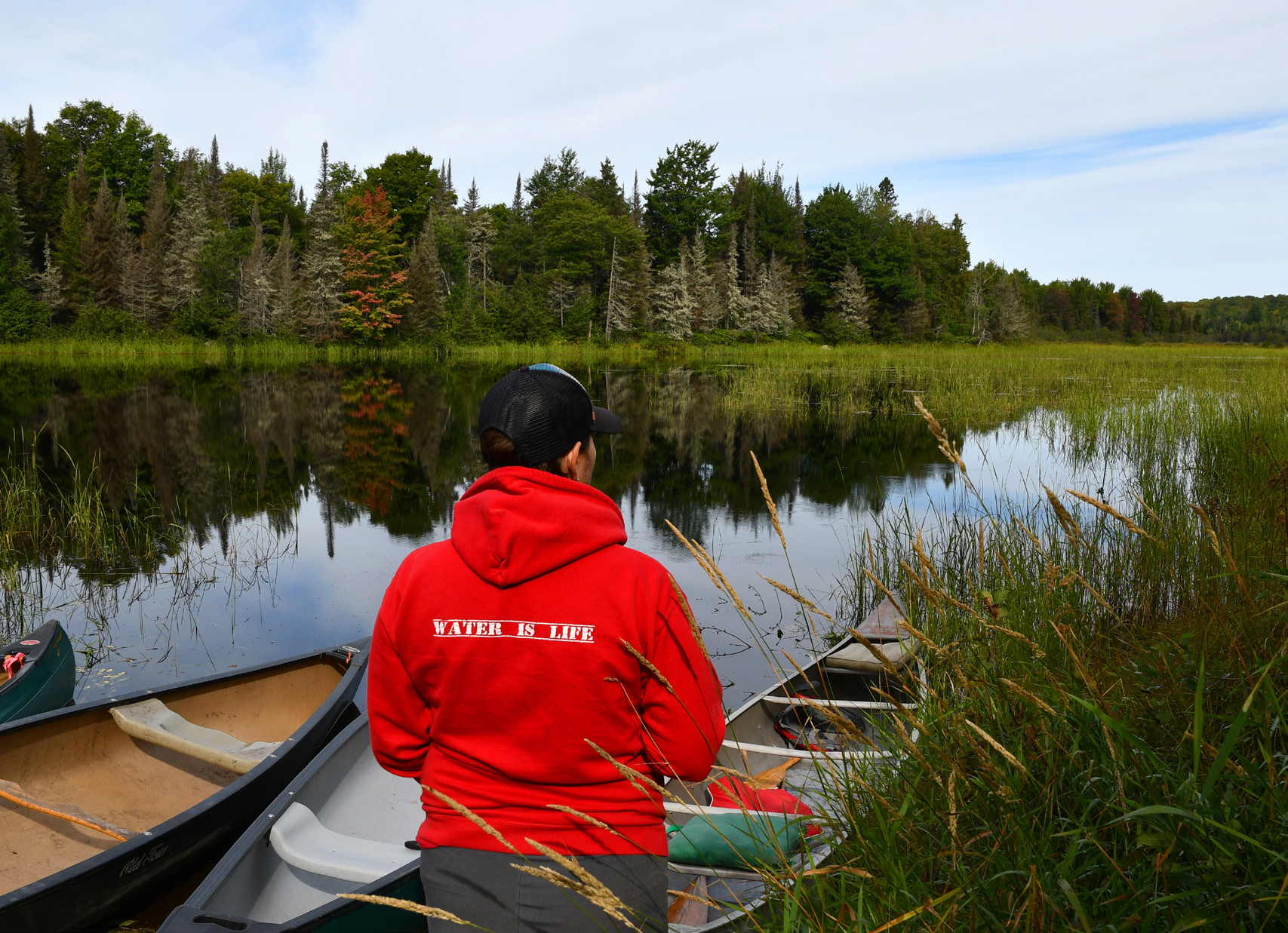
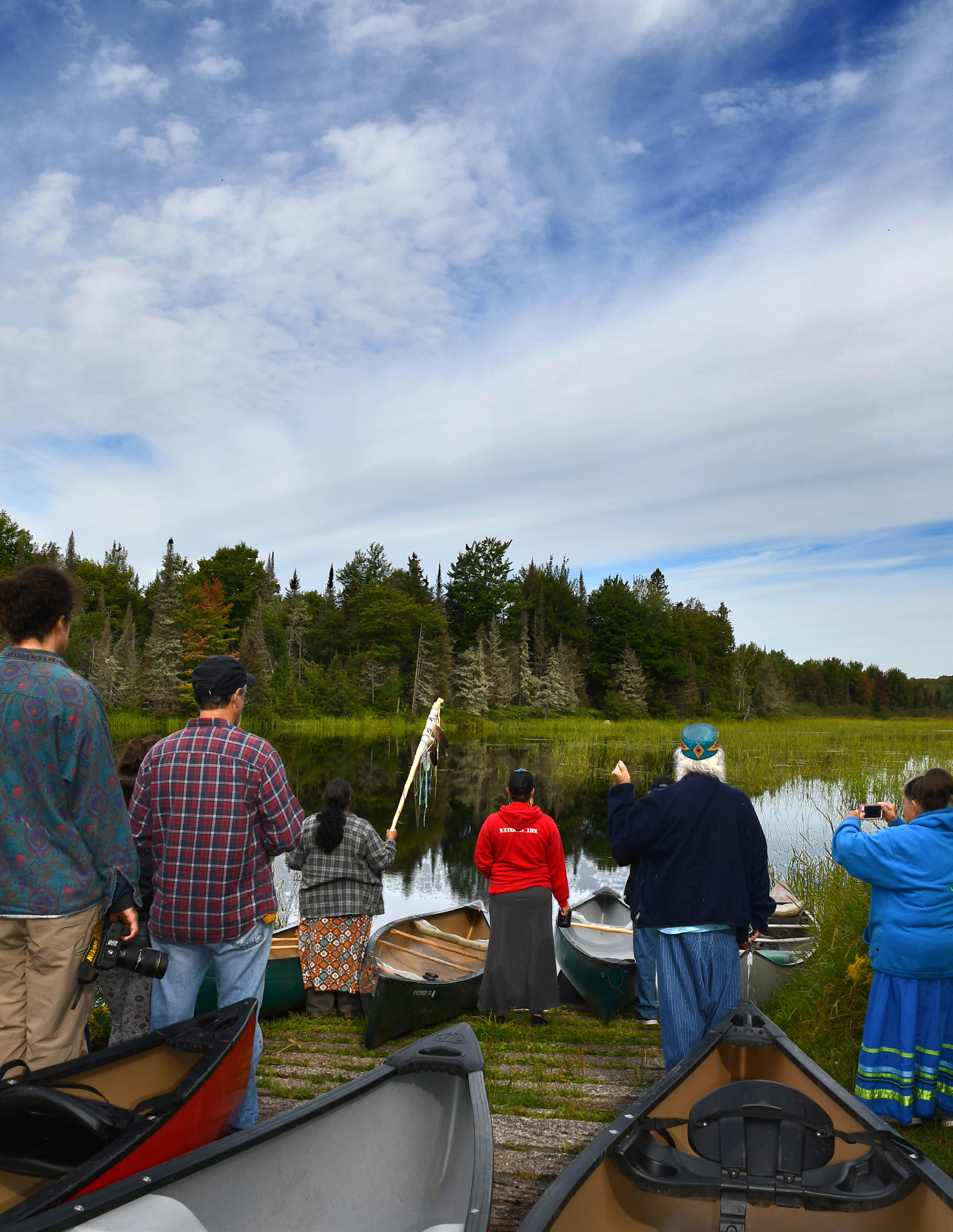
"Working in a good way means coming into relationship first. The work follows the relationship — not the other way around."
What It Means to Work in a Good Way
These principles apply across roles and contexts. They are not rules — they are orientations that, when genuinely held, make better relationships and better outcomes possible.
Center Tribal Sovereignty
Anishinaabe nations hold inherent sovereignty over their territories and treaty rights. All work touching Manoomin should begin with recognition of this sovereignty — not as a formality, but as a genuine orientation to who holds authority and responsibility.
Build Relationships First
Good work cannot happen without trust, and trust takes time. Before proposing research, seeking data, or initiating projects, invest in building genuine relationships with the communities and individuals who hold responsibility for those waters.
Practice Reciprocity
Any engagement with Manoomin communities should be reciprocal — not extractive. Ask what you can offer, not just what you can learn or take. Return something of value, whether that is data, capacity, time, advocacy, or simply attentive presence.
Respect Data Sovereignty
Data generated by or about Tribal communities belongs to those communities. Follow tribal data governance protocols. Do not share, publish, or act on data without explicit community consent — and honor the conditions under which that consent was given.
Hold Humility About Knowledge
Anishinaabe knowledge holders have observed and cared for Manoomin for far longer than any scientific institution. Western scientific knowledge is one lens among many — not the authoritative frame into which Traditional Ecological Knowledge should be translated or subordinated.
Accept Accountability
Mistakes will happen. The question is whether you are accountable for them — willing to hear when harm has been caused, to understand how, and to change your practice. Accountability is not a moment of apology; it is an ongoing orientation to relationship.
Guidance for Researchers
Research on Manoomin — its ecology, genetics, water quality requirements, or cultural dimensions — can support restoration efforts. It can also extract value from communities and waters without giving anything back. The difference lies in how it is conducted.
- Seek formal partnerships with Tribal natural resource departments before designing research
- Include Tribal co-investigators and community members as full research partners
- Follow tribal data governance agreements for any data collected in or about tribal communities
- Share findings with communities before publication and incorporate their feedback
- Design research questions collaboratively — not just data collection methods
- Return all data, samples, and findings to the communities in accessible formats
- Conducting research on tribal lands or waters without explicit authorization
- Publishing findings without community review and consent
- Treating Traditional Ecological Knowledge as data to be extracted and cited
- Assuming that IRB approval substitutes for community consent
- Designing research that benefits your career or institution primarily rather than the community
- Disappearing after data collection with no follow-through on commitments
Guidance for Agency Staff
State and federal agencies play a significant role in the water quality, hydrology, and harvest regulations that affect Manoomin. How those agencies engage with Tribal nations determines whether that role supports or undermines Manoomin's recovery.
- Engage Tribal nations as government-to-government partners — not as stakeholders or public commenters
- Learn the basics of treaty rights and Tribal sovereignty before beginning any Manoomin-related work
- Consult Tribal natural resource staff early in permitting and regulatory processes
- Build institutional knowledge about Manoomin into staff training and department culture
- Follow through on commitments and communicate transparently when circumstances change
- Treating Tribal consultation as a procedural box to check at the end of a process
- Assuming state environmental law supersedes treaty rights
- Making decisions affecting Manoomin waters without Tribal input
- Delegating Tribal engagement entirely to a single point of contact with no institutional backing
- Using grant funding as leverage for Tribal compliance with agency priorities
Guidance for Non-Native Communities & Allied Organizations
Non-Native residents of Manoomin watersheds, educators, conservation organizations, and individuals who care about Manoomin's recovery all have a role to play. That role is supporting — not leading — the work that Tribal nations are already doing.
"The most important thing non-Native allies can do is listen, and then act on what they heard."
— MWRI Community VoiceAs a Landowner or Lakeshore Resident
Protect riparian buffers on your property. Avoid using fertilizers or pesticides near waterways. Keep your shoreline natural rather than hardened. Before undertaking any work near Manoomin beds — including dock installation, dredging, or water control structures — contact the relevant Tribal natural resource department and EGLE to understand the implications.
As an Educator
Use MWRI's Stewardship Guides to bring Manoomin into your classroom — but do so in a way that centers Anishinaabe voices and perspectives, not just ecological information. Connect with Tribal education departments in your region. Before developing curriculum, share drafts with Tribal educators and be open to revision. Do not use machine translation of Anishinaabemowin words — if you want to use language, use it correctly and with permission.
As a Conservation or Environmental Organization
Support Tribal-led Manoomin initiatives with resources, advocacy, and institutional capacity — without attempting to lead or direct them. Advocate for the policy changes that Tribal nations are calling for, even when those changes may be politically difficult for your organization. Do not develop independent "wild rice" programming that is not coordinated with MWRI and relevant Tribal nations.
As an Individual
Purchase authentic hand-harvested Manoomin from Tribal enterprises. Learn about the Anishinaabe relationship with Manoomin through the resources on this site and from Tribal educators. Speak up when you encounter misrepresentations of wild rice — in grocery stores, in educational settings, in media. Understand that supporting Manoomin means supporting the sovereignty and wellbeing of the nations whose relationship with Manoomin makes their recovery possible.
Get the Full Guide
Guide 3 includes the complete principles and guidance sections, as well as appendices with additional resources for each audience. Download free.
Download will open in a new tab.