Education & Outreach
Spreading awareness of Manoomin's cultural and ecological importance, fostering relationships between Indigenous and non-Indigenous communities, and building shared understanding across Michigan.
Building Knowledge, Building Relationship
Education and outreach are not one-way transfers of information. They are about building relationships — between people and Manoomin, between Indigenous and non-Indigenous communities, and between knowledge systems.
MWRI's education work spans from K-12 school programs and university partnerships to workshops for state agency staff, conservation professionals, and riparian landowners. The goal is not simply to share facts about wild rice, but to kindle a genuine appreciation of Manoomin's cultural, spiritual, and ecological significance.
The Stewardship Guide itself is an education tool — a living document designed to be read, shared, discussed, and returned to as understanding deepens. MWRI encourages everyone who cares about Michigan's waters and communities to read it, share it, and let it change how they see this place.
Read the Stewardship Guide
"Michiganders braid Manoomin into their cultural identity, ensuring they care for Manoomin across generations — similar to the way the Great Lakes are a common cultural connection in Michigan."
What We Are Working Toward
These five goals guide MWRI's education and outreach subcommittee. Full objectives are detailed in Guide 2: MWRI Goals & Objectives.
Embracing Cultural & Ecological Value
Indigenous and non-Indigenous community members in Michigan, especially youth, as well as out-of-state visitors, embrace the cultural, spiritual, and ecological value of Manoomin.
State & Federal Land Managers
State and federal land managers value Manoomin and seek opportunities to protect, restore, and enhance them on state and federal lands.
Professional Training
Professional wetland and other restoration/conservation professionals receive technical training and information that enables them to contribute to the protection, restoration, and enhancement of Manoomin on public and private lands.
Riparian Landowner Awareness
Riparian landowners, their technical support (consultants, Cooperative Extension), and surrounding Michigan communities recognize and respect the cultural, spiritual, and ecological value of Manoomin.
Manoomin as Michigan's Cultural Identity
Michiganders braid Manoomin into their cultural identity, ensuring they care for Manoomin across generations — similar to the way the Great Lakes are a common cultural connection in Michigan.
See Guide 2: MWRI Goals & Objectives for the full list of objectives.
Learning Together on the Water
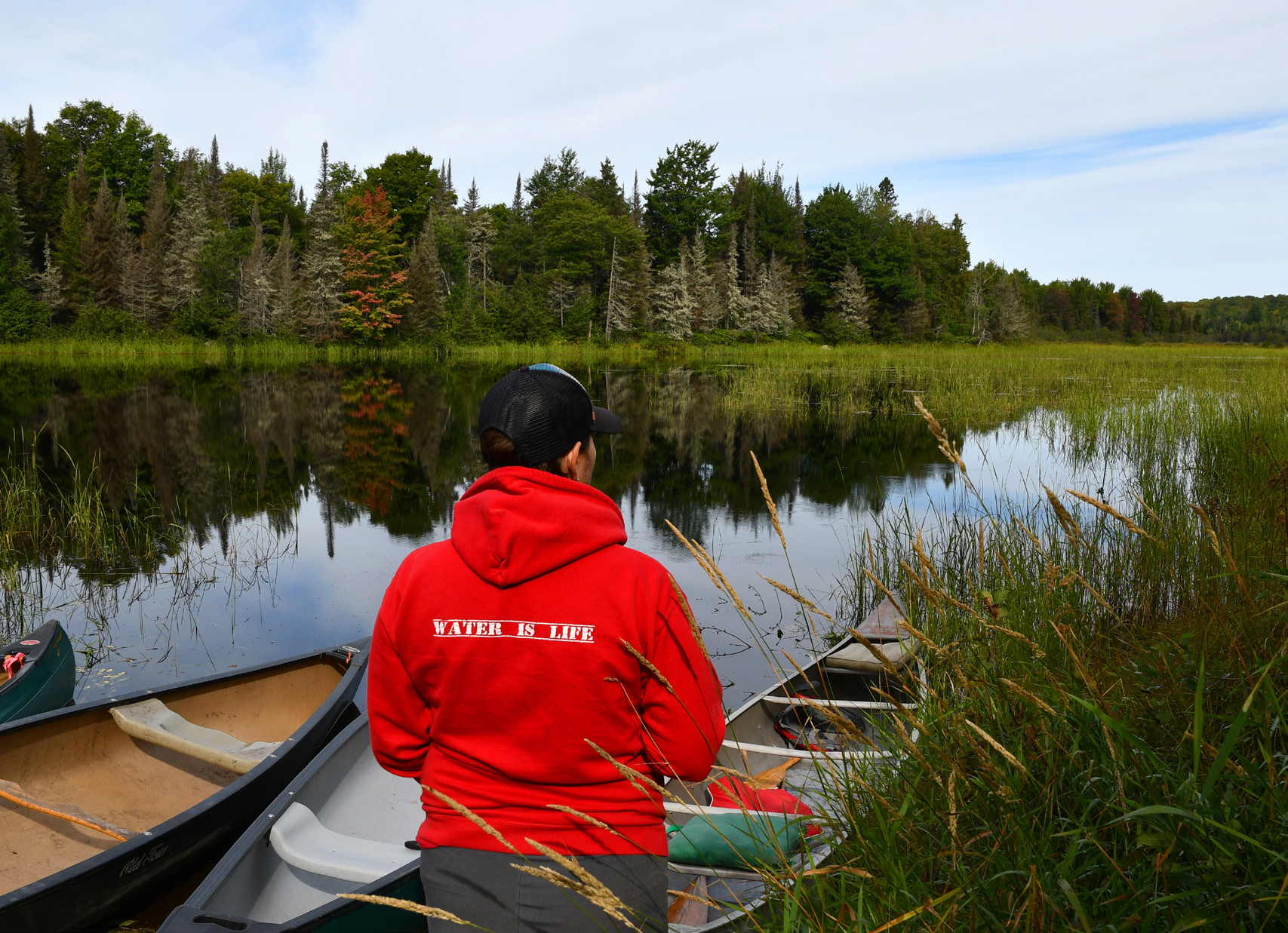
Rice camps are one of MWRI's most powerful education tools — bringing people together on the water, in direct relationship with Manoomin, learning through doing.
These community gatherings are open to everyone — Indigenous and non-Indigenous, experienced harvesters and first-timers. Participants learn harvesting practices, hear from knowledge holders, share meals, and experience firsthand what it means to be in relationship with Manoomin.
For many participants, attending a rice camp is transformative. It is one thing to read about Manoomin's cultural significance; it is another to stand in a canoe at dawn, surrounded by their stalks, understanding in your body what the Stewardship Guide means when it says we all live together in a good way.
View Upcoming EventsWouldn't it be cool if rice camps were just a thing? I'm off this week, we're ricing. That annual celebration and community gathering out there — how does that fit into the regular seasonal activities? I mean, many people sugar bush.
Ways to Learn & Share
Whether you are a student, educator, conservation professional, or curious Michigander, there are meaningful ways to participate in MWRI's education work.